
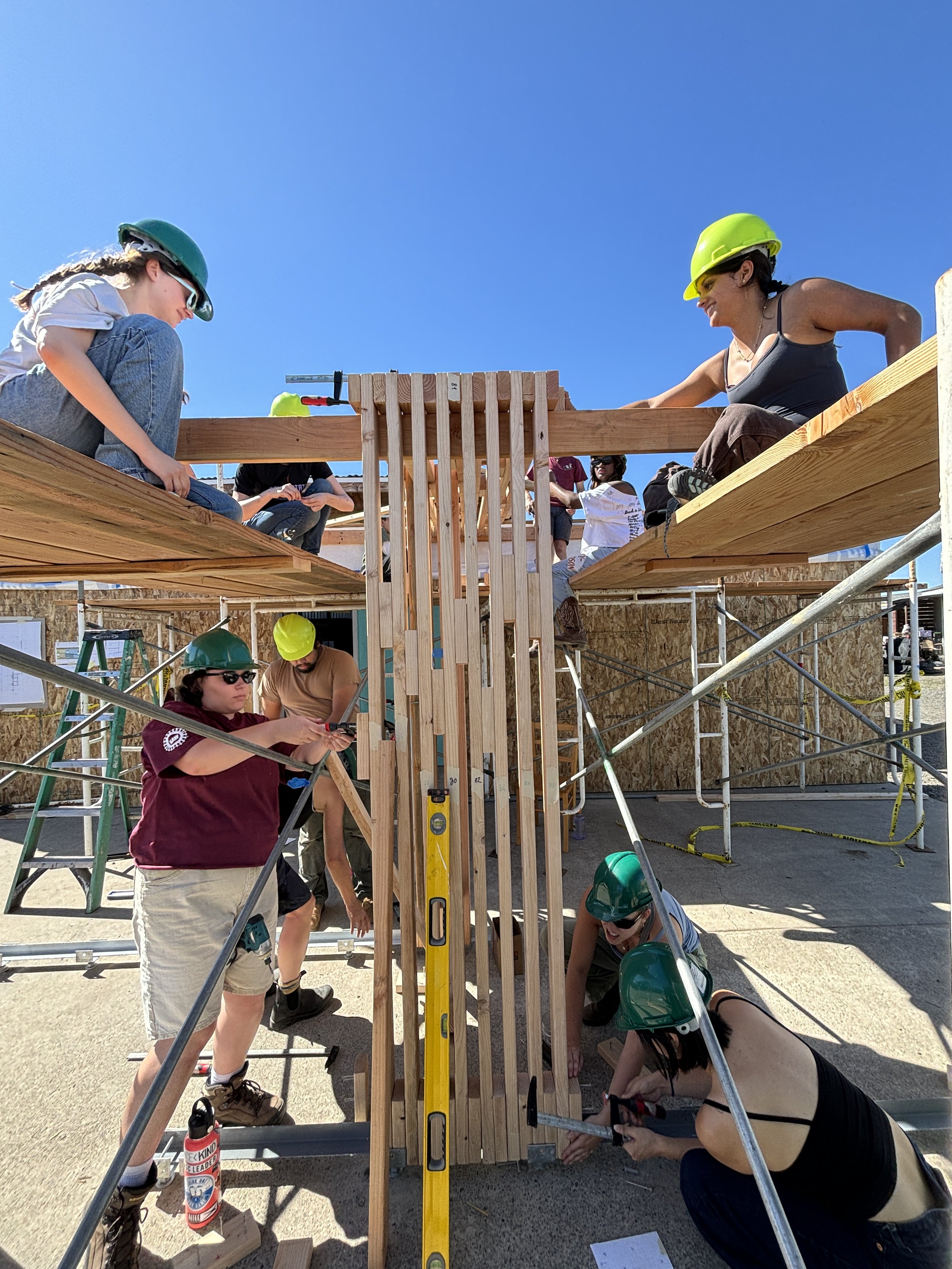
UO Bruton Design Intensive | "The Village Nest”
Where: Eugene, OR (USA)
When: September 2025
Role: Courtesy Faculty & Co-Instructor with Ursula Hartig
Program: Bruton Design Intensive (two week design-build intensive) at the University of Oregon
Partners: Everyone Village, Jerry’s, Lowe’s, Coyote Steel, Lane Forest Landscape, BRING, Gray’s Garden Center.
Photos Credits: University of Oregon; the Author
The University of Oregon’s Bruton Design Intensive represents a dynamic and transformative program that brings together students from the School of Architecture & Environment for an immersive two-week design-build charrette. This program goes beyond traditional classroom learning to equip students with a comprehensive skill set that extends well beyond the realm of design.
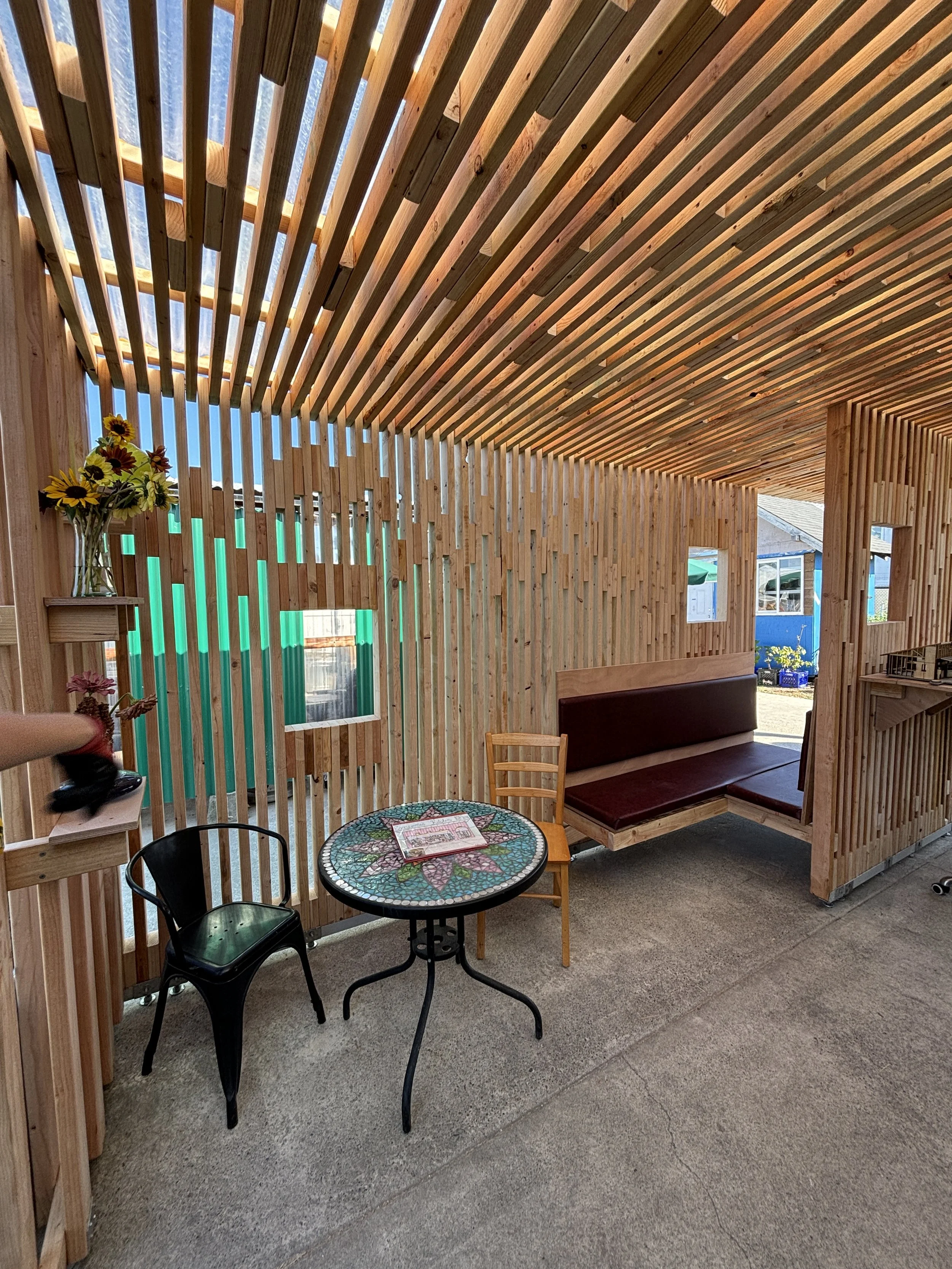
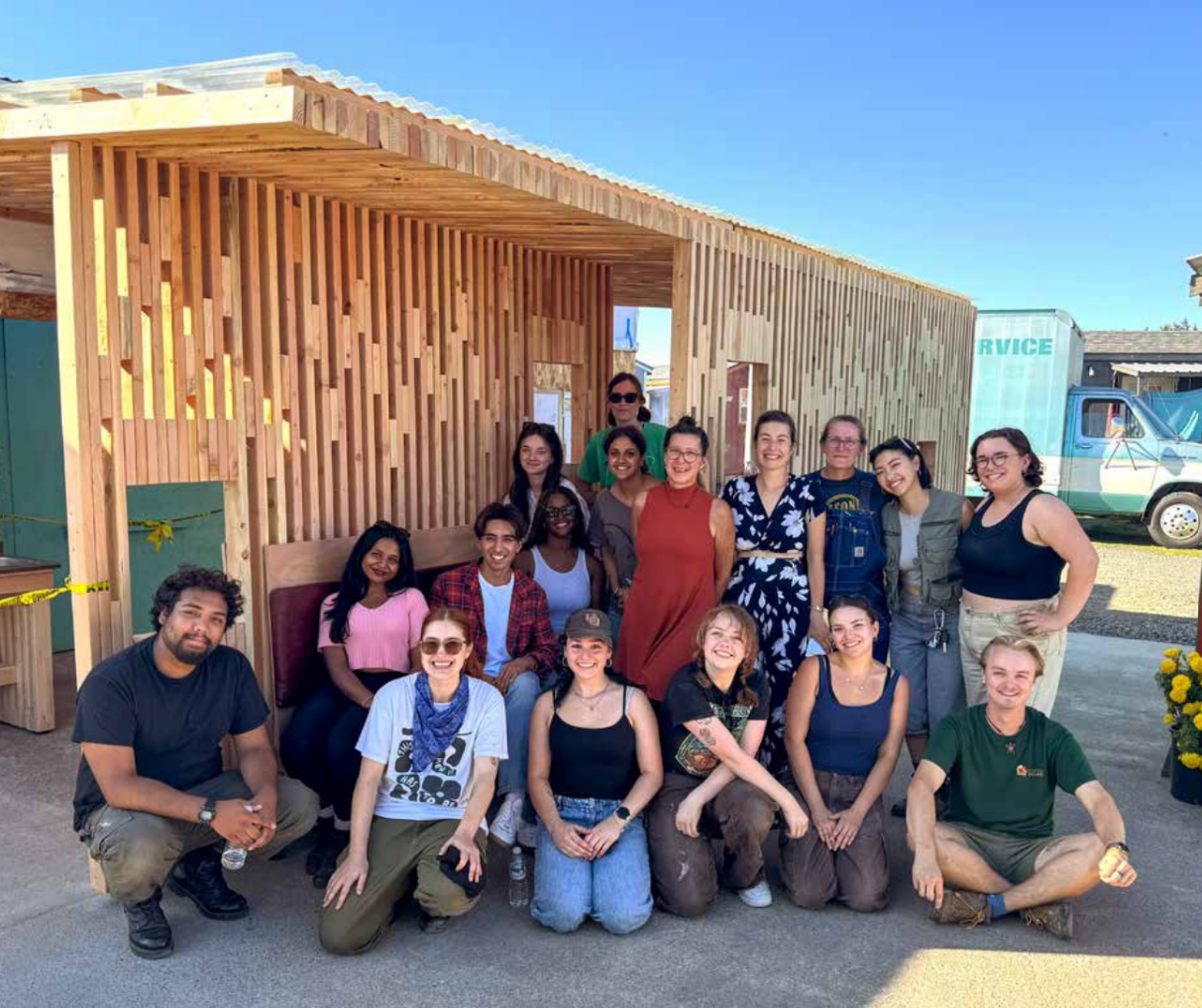
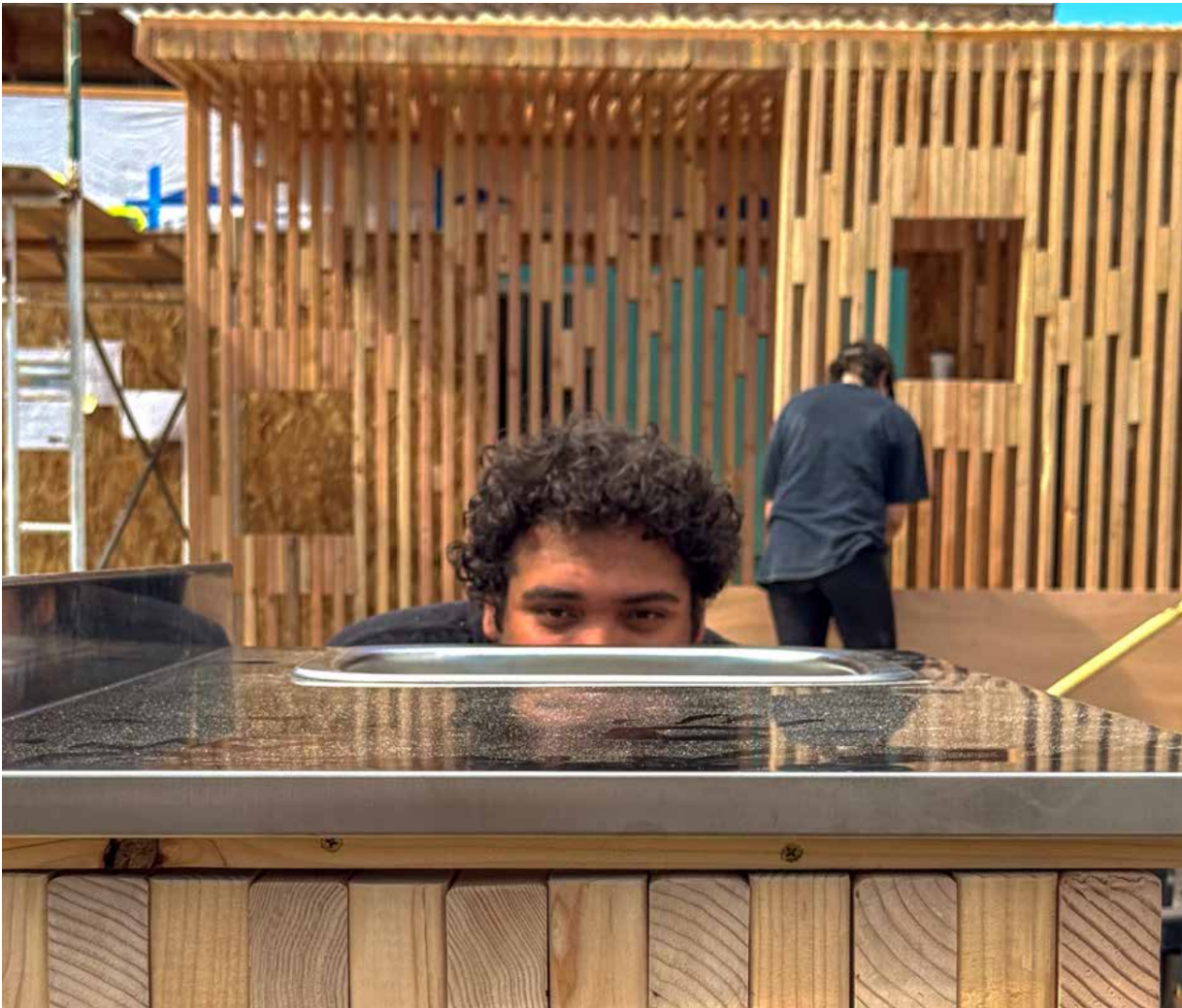
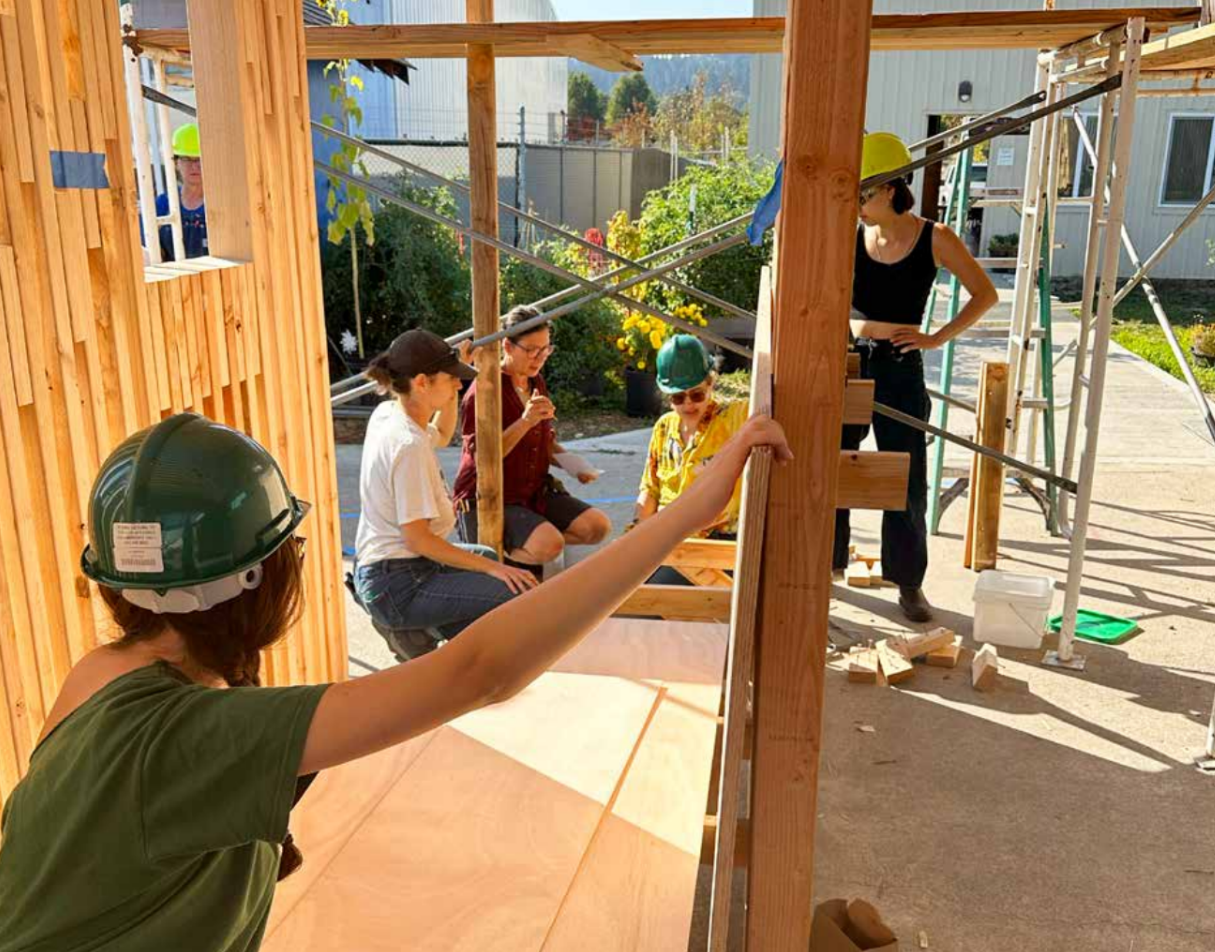
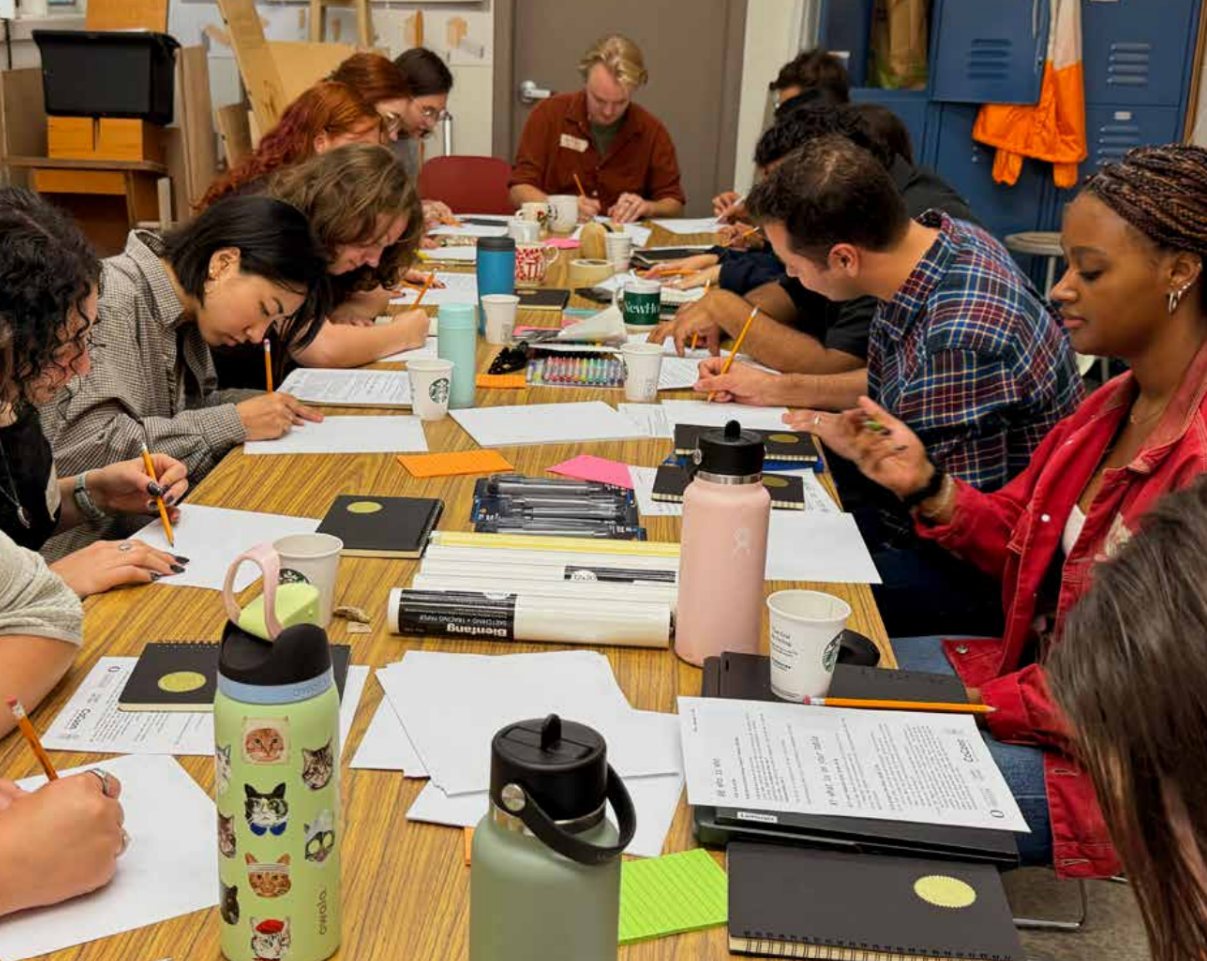
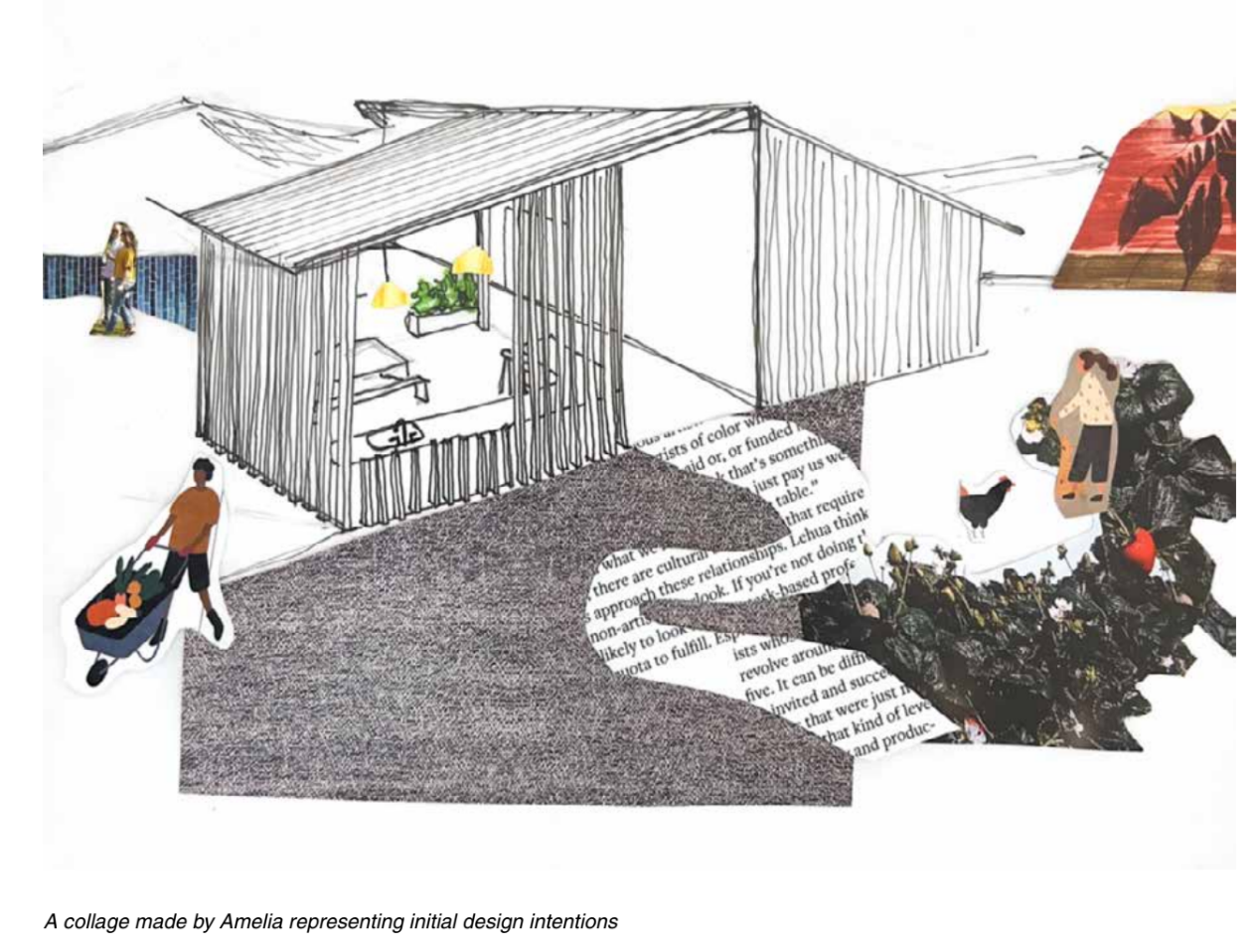
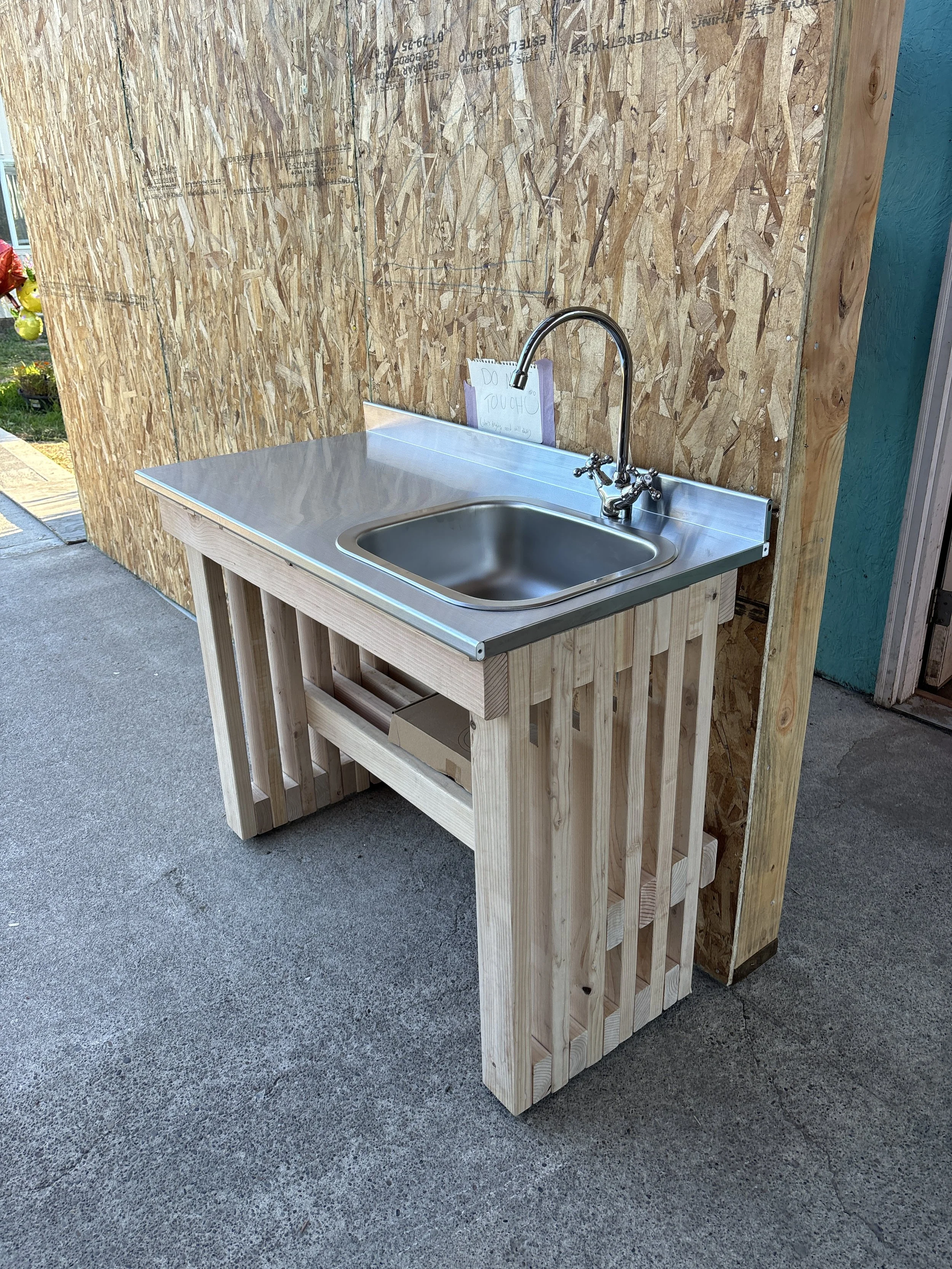
During the 2024 Bruton Design Intensive, 14 students collaborated closely with Everyone Village - a local non-profit providing shelter and resources to 70 residents experiencing homelessness in Eugene. Through meaningful conversations with the residents, students explored the theme of “prepping, cooking, and gathering around food”. The Village Nest emerged through food-mapping exercises and conversations about comfort, routine, and shared meals. Food became an underlying structure of the program, even though it was only one part of it. Kitchen elements, countertops, foldable tables, benches, and seating paces were all designed as tools for villaging.
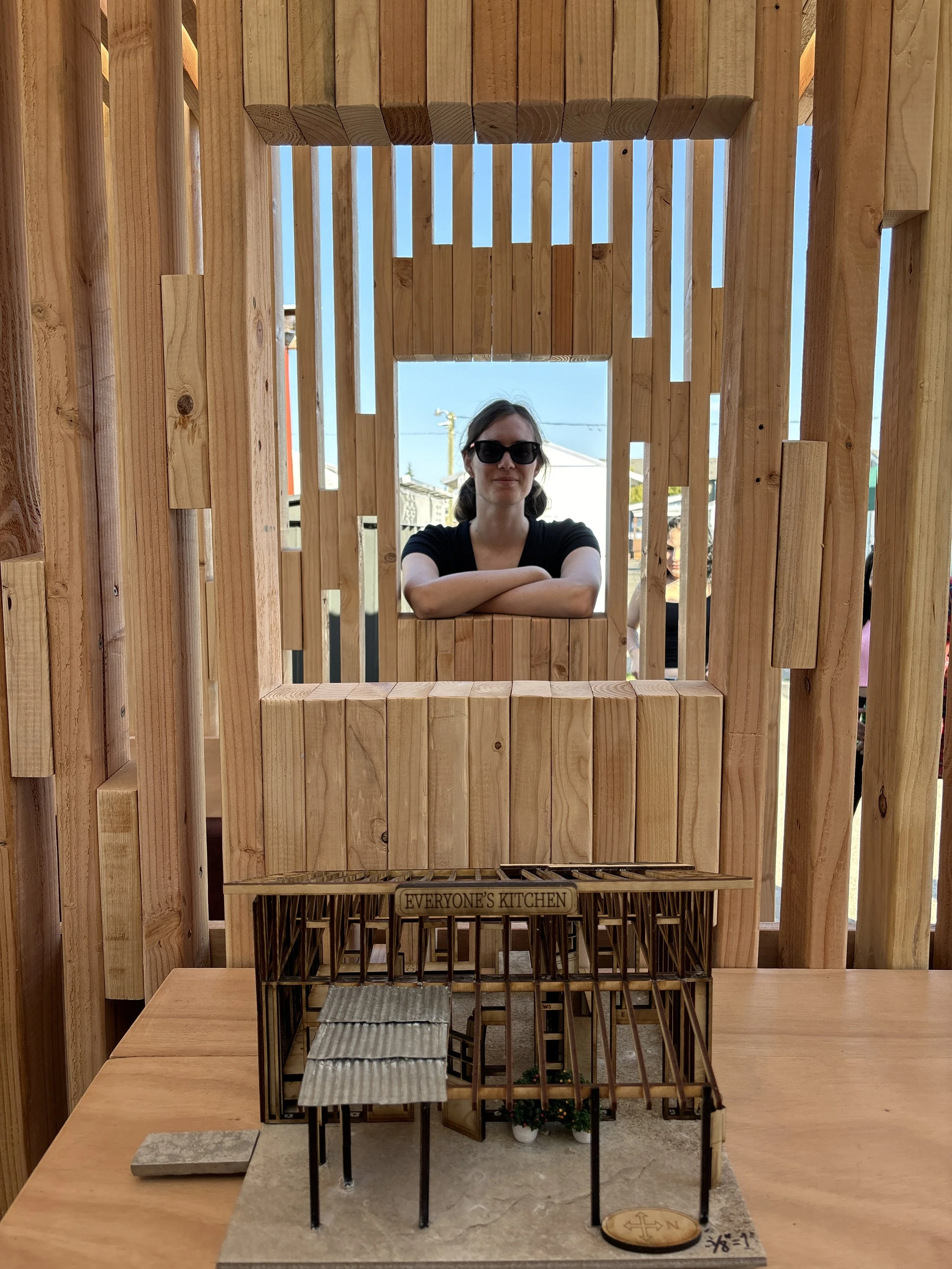
The Village Nest became a place not just for food preparation, but for gathering and resting, a zone of comfort, nourishment, connection, and everyday care. This year’s work focused on reinforcing the internal life of the village and tying its programs together through this multifunctional space. Care and consideration remained central throughout the design process.
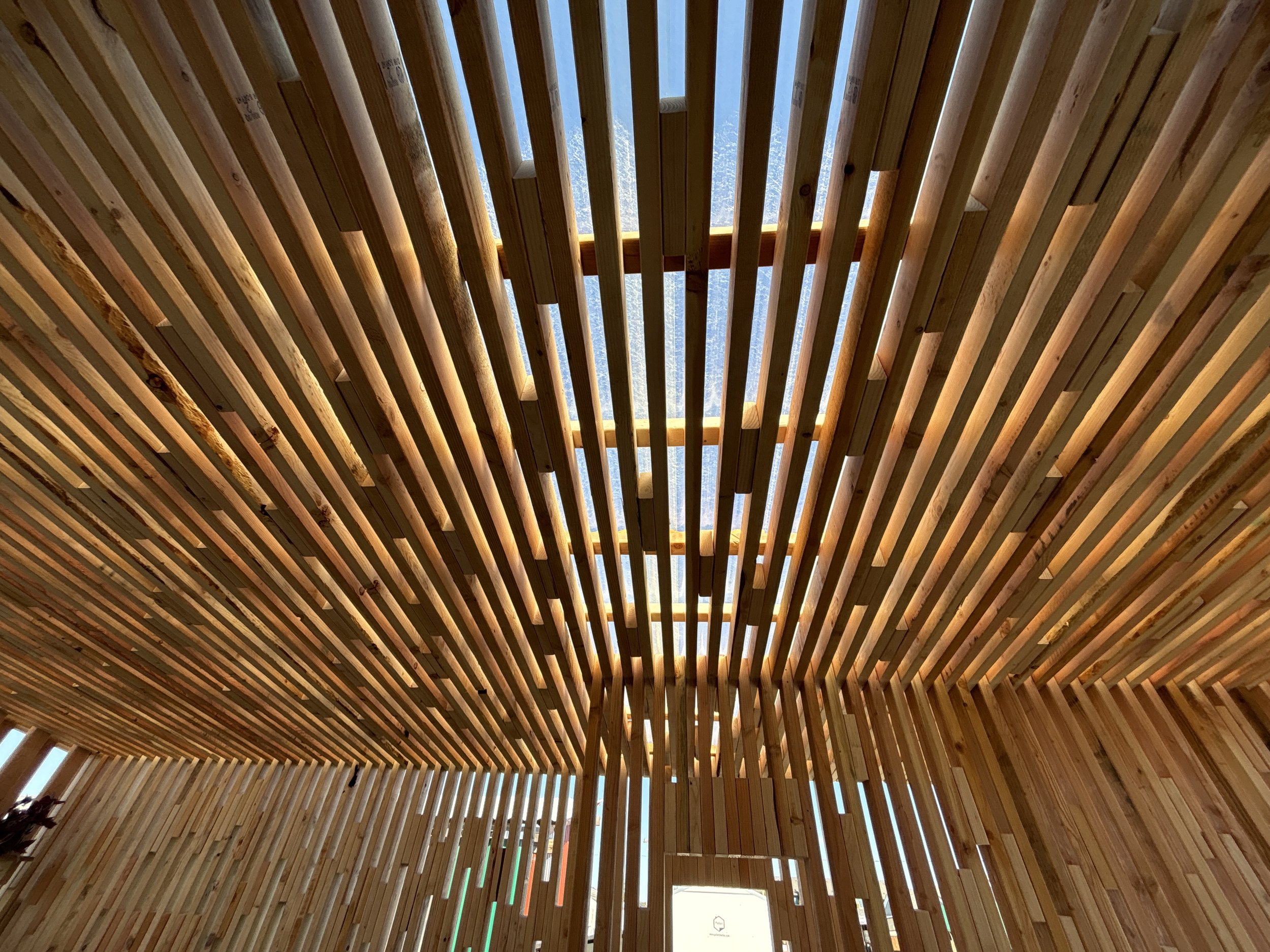
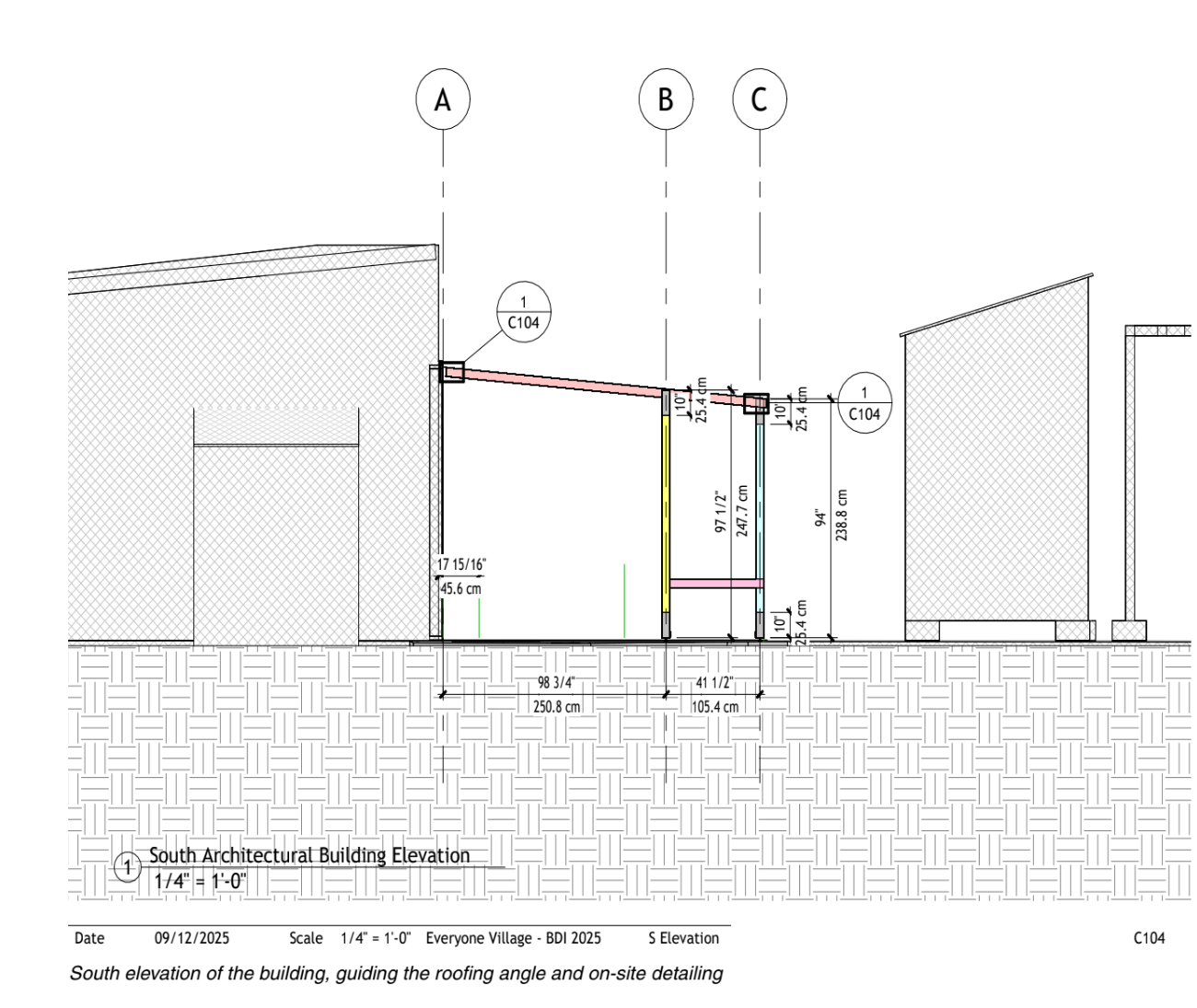
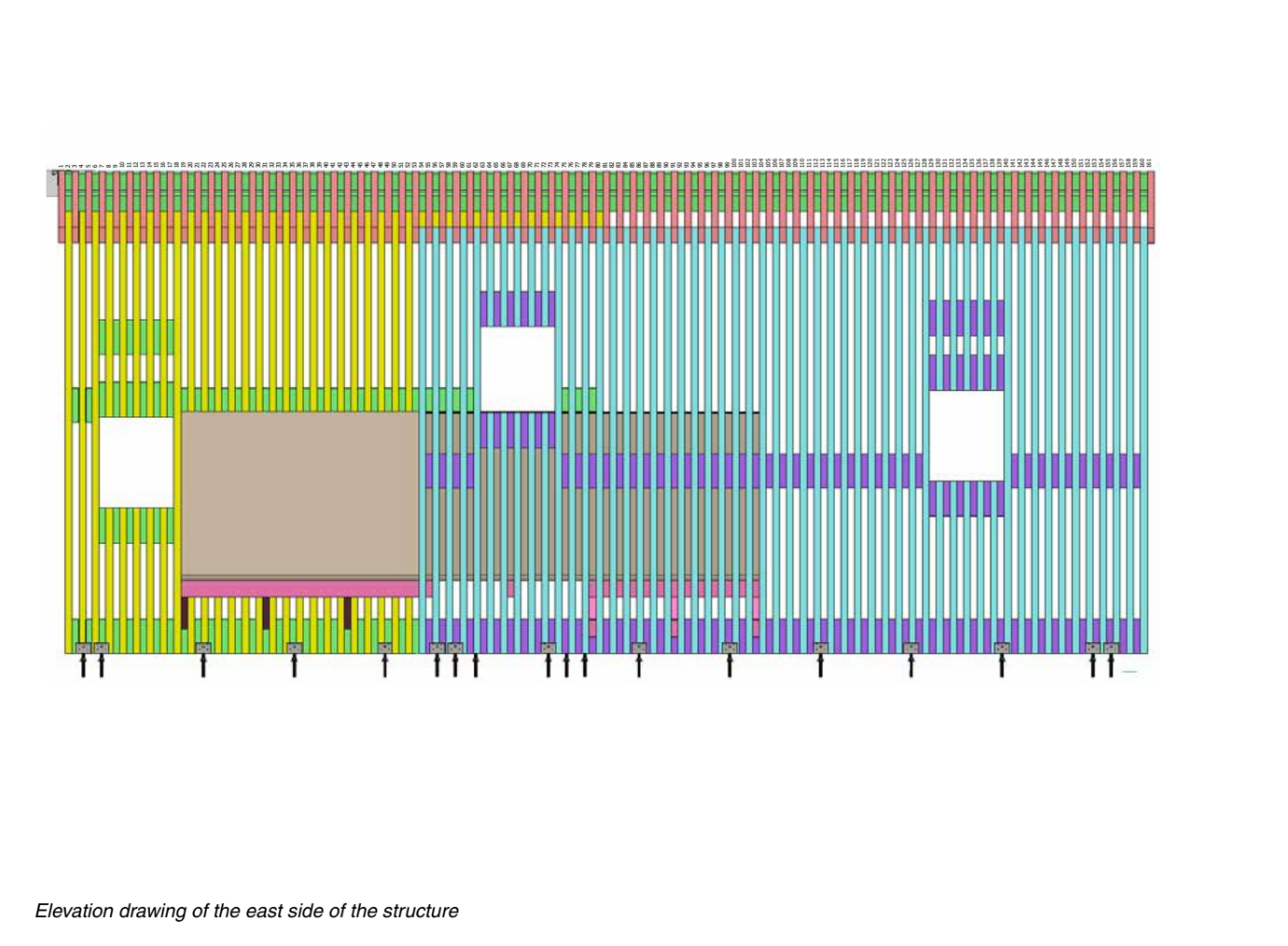
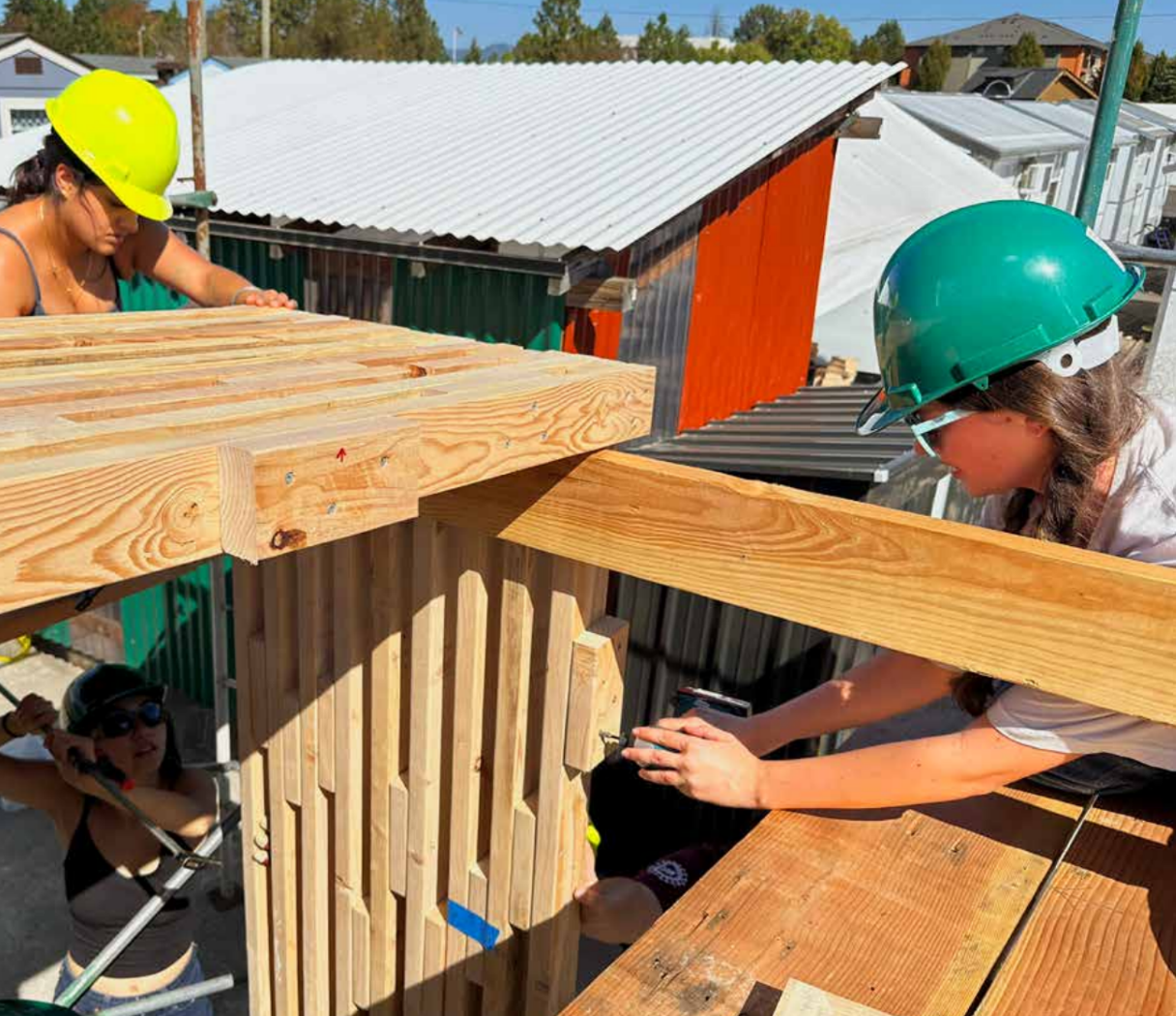
The main structure is composed of interwoven 2x4" pieces, a design that simplified construction while allowing for the integration of additional elements.

“When I first heard students were coming to design something for the Village, I thought it would just be another project happening around us. But they asked us what food means to us. They wanted to know where we like to sit, how we gather, what makes a space feel welcoming. Being part of the conversation changed how I saw it. This pergola is going to be where people first walk up to eat together. For a lot of us, meals are the most stable part of our day. Knowing that something I helped talk about will be built there — that means something. It makes me feel like I belong here, not just as someone staying in a shelter, but as someone helping shape it.”